
Japan is a country where the smallest details feel cared for. Train conductors bow as they leave each car. Shopkeepers wrap your purchase like a gift. Even a simple bowl of noodles arrives looking like someone meant it.
The country moves between old and new without missing a step. You can stand in front of a quiet wooden temple in the morning, then ride a train at 180 miles an hour that afternoon. Neon-lit streets in Tokyo buzz late into the night, while a few hours away, monks rake gravel gardens in silence.
Food sits at the heart of daily life. People line up for ramen, eat soba at standing counters, and choose perfect pastries out of glass cases. Meals are fresh, seasonal, and taken seriously, whether it’s street food or a tiny eight-seat restaurant.
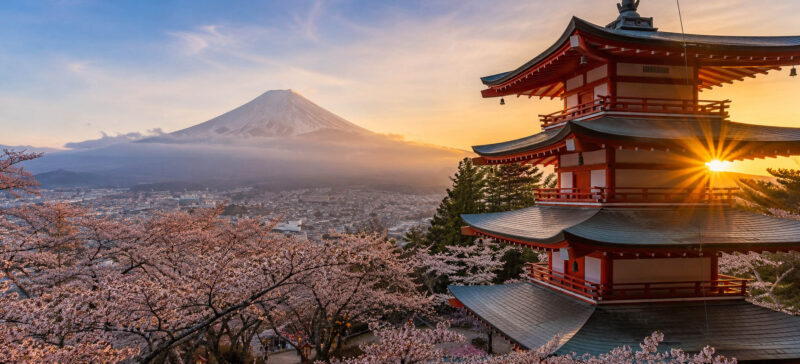
The land itself shifts as you travel. Snowy mountains give way to rice fields, hot spring towns, and southern beaches. Each season brings its own mood: pink cherry blossoms in spring, fiery red maples in fall.
What stays with travelers, though, is the feeling. Streets are clean and calm. Strangers go out of their way to help. And small rituals, from soaking in a hot bath to slipping off your shoes at the door, quietly teach you to slow down and pay attention.
- Language: Japanese. English signage is reliable in cities, major train stations, and tourist areas. Outside cities it becomes sparse quickly. Translation apps (Google Translate works well with its camera function for menus and signs) fill most gaps.
- Money: Japanese yen (JPY). Cash is still essential in Japan: many small restaurants, ramen counters, temples, shrines, and rural businesses do not accept cards. Carry enough yen for a full day whenever you leave a major city. 7-Eleven and Japan Post ATMs accept most foreign debit and credit cards reliably. International cards are less reliable at other ATM networks. Notify your bank before travel.
- Mobile data: Free public Wi-Fi is limited outside hotels and major tourist sites. An eSIM purchased before departure is the practical solution. Klook sells Japan eSIM plans at competitive rates and is easy to set up before you leave home. Holafly (unlimited data, best for longer trips or heavy users) and Airalo (tiered plans, best for travelers who primarily need maps and messaging) are solid alternatives.
- Electricity: Type A plug, 100V, 50/60Hz. The plug shape is identical to North American plugs, so US travelers need no adapter. Most modern devices (laptops, phones, cameras) handle the voltage difference automatically; check your device’s power brick for “100–240V” to confirm. Older devices may need a voltage converter.
- Medications: Several common US prescriptions are strictly prohibited in Japan, including Adderall and all other amphetamine-based ADHD medications. Possession is a criminal offense regardless of a valid foreign prescription. Some other medications require a permit obtained at least two weeks before travel. Check the full list at mhlw.go.jp before you pack.
- Top Things to See and Do in Japan
- More Things to See and Do in Japan
- Traveling with Kids in Japan
- What to Eat in Japan
- What’s Worth Buying in Japan
- Best Time to Visit Japan
- Typical Costs in Japan
- Safety in Japan
- Customs and Etiquette in Japan
- Travel Tips for Japan
- Where to Stay in Japan
- How to Get Around Japan
- Suggested Japan Itineraries
- Off the Main Route in Japan

Top Things to See and Do in Japan
Walk through Fushimi Inari-taisha
Just outside Kyoto, thousands of bright orange gates line a path that climbs a forested mountain. Each gate, or torii, was donated by a person or business, and walking beneath them feels like moving through a tunnel of color. The trail to the top takes about two hours, and the higher you go, the quieter it gets. Early in the morning – with soft light through the trees and almost no one around – it’s magic.
Eat your way across the country
Eating in Japan is an experience all its own. Slurp ramen at a counter, grab grilled skewers at a smoky izakaya, or watch a sushi chef work with quiet focus. Even the convenience stores sell food worth getting excited about. Meals here are fresh and made with care, and trying things you can’t name is half the fun.
Soak in an onsen
Onsen are natural hot springs, and bathing in them is a beloved tradition. After washing off, you sink into steaming mineral water, sometimes outdoors with a view of mountains or falling snow, cold air touching your face while the whole world goes still.
Wander Kyoto’s temples and shrines
Kyoto holds hundreds of temples and shrines, from a gold-covered pavilion to mossy gardens and stone lantern paths. These are living places of worship, not just sights, and a hush settles over you as you walk through them. You might catch a wedding, hear a deep bell, or watch someone pray. Stroll the old streets between them, past wooden houses and tea shops.
Ride the Shinkansen
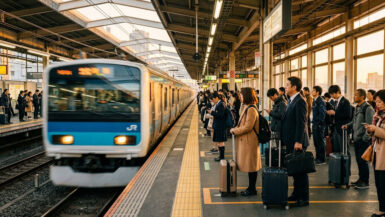
The Shinkansen, Japan’s bullet train, glides across the country at remarkable speed, smooth and nearly silent. Watching cities, rice fields, and mountains blur past the window is a thrill in itself. On a clear day, the run between Tokyo and Kyoto serves up a view of Mount Fuji rising in the distance. It’s fast, comfortable, and somehow deeply relaxing.
More Things to See and Do in Japan
Stay in a ryokan
A ryokan is a traditional Japanese inn, and a night in one is a window into an older way of life. You sleep on a futon laid over tatami mats, wear a soft cotton robe, and eat beautiful multi-course meals in your room. Many have their own hot spring baths. The slow pace and quiet comfort make it feel less like a hotel and more like being a welcomed guest.
Graze through Tsukiji Outer Market
Tokyo’s Tsukiji Outer Market is a maze of stalls where the seafood was swimming that morning. Vendors grill scallops, slice tuna, and hand over warm tamago omelets on sticks. The energy is loud and friendly, and the smells pull you from one stall to the next. Arrive hungry in the morning and graze your way through breakfast.
Watch Shibuya Crossing
Shibuya Crossing in Tokyo is the busiest intersection in the world, and watching it is hypnotic. When the lights change, hundreds of people pour across from every direction at once, then the whole thing clears in seconds. Neon signs and giant screens light up the buildings around it. Stand in the middle on a green light, or watch from a café window above.
Experience a tea ceremony
The Japanese tea ceremony turns making and drinking green tea into a slow, graceful ritual. Every movement, from folding the cloth to whisking the matcha, is done with purpose. Sitting through one teaches you to notice small things: the bowl in your hands, the bitter taste, the quiet in the room. It isn’t really about the tea. It’s about being fully present for a few unhurried minutes.
Explore a depachika food hall
Tucked into the basements of big department stores, a depachika is a dazzling food hall packed with vendors. Like the foodcourt at your local mall, but way, way better. You’ll find glossy pastries, pickles, bento boxes, wagyu beef, and sweets almost too pretty to eat. Samples are everywhere, and the displays look like jewelry counters. It’s a good place to pick up a picnic or a gift.
Visit Hiroshima Peace Memorial Park
Hiroshima Peace Memorial Park honors the people killed when an atomic bomb was dropped on the city in 1945. At its center stands the skeletal dome of a building left standing after the blast. The park and its museum are moving and sometimes hard to take in. You’ll likely leave quieter than you arrived. That’s the point.
Meet the deer in Nara
In the old city of Nara, hundreds of tame deer roam the parks and temple grounds freely. They’ll bow their heads for a cracker. If you are feeding them, when you run out of food you must raise both of your hands with open palms facing the deer, otherwise they may chase you for more treats. Nearby sits a giant bronze Buddha housed in one of the largest wooden buildings on earth.
Find powder snow in the north
Japan gets some of the lightest, deepest snow on earth, especially in Hokkaido and the northern mountains. The powder is so soft that skiers fly in from across the world for it. The resorts are well run and far less crowded than many abroad, and the runs wind through quiet birch forests. Best of all, you can end a cold day on the slopes by soaking in a hot spring under the stars.
Traveling with Kids in Japan
Trains run on schedule, streets are safe to explore, and food is easy even for picky eaters, since a bowl of plain udon or a rice ball from a convenience store is never far away. The country also has a strong pull for kids: trains that hit 180 miles an hour, robots and pop culture on every corner, and animals you can actually get close to.
Ages 6 to 12
Feed the deer in Nara. Hundreds of tame deer wander the parks and temple grounds, and they’ll bow their heads for a cracker before nudging you for more. It’s hands-on, it’s funny, and even a short visit holds a kid’s attention. Nearby, the giant bronze Buddha at Todai-ji gives the trip a second payoff.
Walk through TeamLab Planets. Shoes off, pants rolled up, and suddenly you’re wading through water while digital koi scatter around your feet. Mirror rooms, hanging orchids, floors that ripple with light: it’s the rare museum where touching things is the point, not a rule you’re breaking.
Watch the snow monkeys bathe at Jigokudani. In Nagano, wild Japanese macaques soak in steaming hot springs right in front of visitors, especially in winter when the contrast between snow and steam is at its most dramatic. The short walk in through a snowy forest is part of the fun.
Ride the Hakone ropeway and pirate-ship cruise. A cable car climbs over volcanic vents at Owakudani, then a mock pirate ship carries you across Lake Ashinoko, with Mount Fuji in view on a clear day. It’s a full afternoon of movement and scenery without much walking required.
Try the arcades in Akihabara. Multi-story game centers packed with claw machines, taiko drumming games, and purikura photo booths give kids a loud, bright break from temples and museums. Bring coins, not a plan, and let them lead.
Ages 13 to 17
Take the Hiroshima Peace Memorial Museum seriously. Teens are old enough for the real weight of this history, not a softened version. Give it at least two hours, and expect a quiet ride back.
Book a hands-on cooking class. Making ramen noodles from scratch or rolling your own sushi in Osaka or Tokyo gives teens something to do with their hands and something to talk about later. This works better than a demonstration, since they’re the ones cooking, not watching.
Hand over the Suica card for a day. Let a teenager plan and navigate one leg of the trip, a subway transfer in Tokyo or a day in Kyoto, with you a step behind instead of in front. Real independence, even for a few hours, lands differently than a guided day does.
Hike Fushimi Inari to the top. Most visitors turn back after the first thirty minutes of orange gates. The full climb takes about two hours, gets steeper and quieter near the summit, and rewards teens who don’t mind sweating for a view. This is the same trail covered in Top Things to See and Do, done all the way through.
Go deep in Akihabara, not just wide. Beyond the mainstream anime shops, Nakano Broadway and Akihabara’s used-game floors hold decades of manga, retro consoles, and collectibles that reward actual browsing. For teens who are actually into the culture, this is a real destination, not a five-minute photo stop.
Hotel rooms in Japan run small, and true triples or quads are hard to find. A family of three often ends up in a twin room with an extra bed squeezed in, and a family of four is more likely to land in two connecting rooms than one. See Where to Stay for city-specific picks, and book early if you need a specific configuration.
If juggling multiple cities with kids in tow sounds like more than you want to plan alone, G Adventures and Intrepid Travel both run Japan-specific family trips built around exactly this kind of itinerary.
What to Eat in Japan
Japan takes food seriously. There are shops that have made nothing but ramen for forty years, neighborhoods where every block holds a different regional specialty, and convenience stores where even a late-night rice ball is fresh and worth eating. Eating well here does not require planning or a big budget.
Ramen
Start with ramen. Every region has its own version. Tokyo ramen tends toward a clear, soy-based broth with thin noodles. Sapporo, in Hokkaido, is known for a rich miso broth topped with corn and butter. Hakata ramen in Fukuoka is all about tonkotsu: a milky, pork-bone broth that simmers for hours. A bowl at a specialist shop will cost ¥800 to ¥1,200.
Sushi
Sushi in Japan bears little resemblance to what most Western travelers have eaten at home. At standing sushi bars, a chef prepares each piece by hand in seconds and sets it on the counter in front of you. Conveyor belt sushi (kaiten-zushi) makes ordering easy and keeps prices low, usually ¥100 to ¥300 per plate. For the splurge, book an omakase counter, where the chef chooses everything. Expect to spend ¥15,000 to ¥50,000 and up. For sushi at breakfast, head to Tsukiji Outer Market in Tokyo and eat standing at a counter with the fish vendors.
Izakaya
An izakaya is a Japanese pub that serves small dishes alongside beer, sake, shochu, and whisky highballs. The food, which can include grilled chicken skewers (yakitori), edamame, sashimi, tamagoyaki, and seasonal vegetables, is designed to be shared and eaten slowly over drinks. Walking into a lively one, pointing at dishes you do not recognize, and ordering a cold beer is how Japanese people actually spend an evening out.
Osaka and street food
Osaka calls itself the kitchen of Japan, and the claim is fair. The food is immediate and generous: takoyaki (octopus balls cooked on a griddle and handed over hot), okonomiyaki (a savory pancake layered with cabbage, pork, and sauces), kushikatsu (skewered and fried meats and vegetables). Dotonbori is the most famous stretch, but the best eating is in the surrounding streets and indoor food arcades. Kyoto’s okonomiyaki style differs from Osaka’s: the ingredients are mixed into the batter rather than layered, producing a denser pancake.
Kaiseki
Kaiseki is Japan’s haute cuisine: a multi-course meal built around the season, the region, and the chef’s judgment. Each course is small, precise, and presented as carefully as a painting. A kaiseki dinner in Kyoto, served in a quiet room overlooking a garden, is worth every yen. Entry-level kaiseki runs ¥10,000 to ¥15,000 per person; serious restaurants charge ¥30,000 and above. Reservations often require planning weeks ahead, and some high-end places require a Japanese-speaking contact or a hotel concierge to book on your behalf.
Tempura, yakitori, and single-dish restaurants
Tokyo in particular has perfected the single-dish restaurant: one chef, one dish, decades of practice. Tempura restaurants batter and fry seasonal vegetables and seafood to order, piece by piece, served as you watch. Yakitori counters do nothing but grill chicken skewers over charcoal. Tonkatsu shops focus entirely on breaded pork cutlets. Lunch at one of these restaurants, which often runs ¥1,000 to ¥2,000 with rice and miso soup included, gets you dinner-level quality for less than half the price.
Konbini food
Do not skip the convenience stores. 7-Eleven, Lawson, and FamilyMart sell fresh onigiri (rice balls) for ¥120 to ¥180, hot foods like fried chicken and steamed buns, sandwiches, bento boxes, and an impressive range of hot and cold drinks. The quality is real, not a compromise. Many Japanese people eat konbini food daily. Breakfast from a convenience store, eaten on a bench before the temples open, is one of the small pleasures of traveling in Japan.
Regional differences worth knowing
Tokyo leans toward refined and restrained: the food is excellent but the presentation and atmosphere tend to be serious. Osaka is louder, more generous, and proudly accessible. Kyoto ritualizes everything. Tofu dishes, pickles, seasonal sweets, carefully prepared broths: the city has been cooking for an imperial court for a thousand years and it shows. Hiroshima has its own version of okonomiyaki, layered rather than mixed, with soba noodles inside. In Hokkaido you will find dairy, crab, lamb barbecue (jingisukan), and ramen built on miso and corn.
Practical notes
Tipping is not done in Japan and should not be attempted. It causes confusion and is sometimes taken as an insult to the chef’s pride in their work. Cash is still required at many small restaurants, ramen counters, and street stalls. Card acceptance is improving but not universal outside major cities and chain restaurants.
tip
Many restaurants display extraordinarily realistic plastic or wax models of their dishes in the front window, complete with prices. These are not decoration. They are a menu you can point to, and they work perfectly when neither you nor the staff speaks the other’s language. If you are not sure what to order or cannot read the menu, walk outside, find what looks good in the window, and point. No one will mind.
Vegetarian and vegan travelers will face a real challenge. Dashi, a stock made from fish and kelp, forms the base of most soups, broths, and many sauces. A dish that appears vegetarian often is not. Larger cities have dedicated vegetarian and vegan restaurants, and Buddhist temple cuisine (shojin ryori) is plant-based by tradition, but communicating dietary restrictions clearly in Japanese is important. Download a dietary restriction card in Japanese before travel.
Food allergies should be communicated clearly and in writing. Sesame, wheat, soy, shellfish, and eggs are present in many dishes. A translation card stating specific allergies is more reliable than verbal communication in a busy kitchen.
Food tours
A food tour on your first evening in a city is one of the smartest things you can do in Japan. Menus are often entirely in Japanese, the best spots have no English signage, and the difference between a celebrated neighborhood counter and a tourist trap two doors down is invisible without local knowledge. A good guide handles the navigation, ordering, and the context, and gives you a mental map of a neighborhood that makes the rest of your time there easier.
Two operators stand out consistently. Magical Trip runs small-group food and bar tours in Tokyo (Shinjuku, Shibuya), Osaka, Kyoto, and Hiroshima, with groups capped at around eight people and a Tripadvisor Best of the Best award to their name. Their tours are available on both Klook and GetYourGuide. Arigato Travel specializes in food and culture tours across Tokyo, Kyoto, Osaka, and Hiroshima, with a particular strength in Kyoto evening experiences through Gion and Pontocho. Their tours are available on GetYourGuide. Search food tours by city on Klook and GetYourGuide to compare current options, read recent reviews, and book in advance. Popular tours sell out one to three weeks ahead during cherry blossom season, Golden Week, and autumn foliage.
What’s Worth Buying in Japan
Stationery and paper
Japanese stationery is in a different category from what you find at home. Washi paper, washi tape, notebooks, fountain pens, mechanical pencils, origami paper: the quality here is noticeably better, and the prices are reasonable. Itoya in Ginza is eight floors of writing instruments and paper goods worth a dedicated visit. Kyukyodo in Kyoto has been selling washi and traditional paper on the same street since 1663. Everything packs flat. For gifts, stationery is a strong choice: light, distinctive, and the kind of thing people actually use.
Knives and kitchenware
Japanese kitchen knives are some of the best in the world. Kappabashi Street in Tokyo is an entire neighborhood of kitchen and restaurant suppliers, with 16 dedicated knife shops in an 800-meter stretch. Most have English-speaking staff. In Kyoto, Aritsugu near Nishiki Market has been making knives since 1560 and will engrave your name on the blade. The two most practical styles for home cooks are the santoku, a general-purpose knife, and the gyuto, the Japanese version of a chef’s knife. Prices start around ¥5,000 for a solid starter knife and climb to ¥50,000 and above for handmade blades.
Several shops will ship your purchase directly home. If you’d rather not pack a heavy or fragile piece, ask at the counter before you leave. If they don’t ship, knives go in checked luggage, not carry-on.
Ceramics and tableware
The pieces you find in Japan are nothing like what gets exported. Tea cups, sake sets, small bowls, plates: the craft here is exceptional, and you can feel it in the weight of a bowl. Kiyomizu-yaki from Kyoto is worth seeking out. The shops around Kiyomizudera Temple and the lanes near Nishiki Market have good selections. Ask whether the shop ships internationally before you commit to buying something fragile. If you’re packing pieces yourself, carry them in your hand luggage.
Anime, manga, and pop culture
Akihabara in Tokyo and Den Den Town in Osaka are where this culture lives. Official merchandise for Pokémon, Studio Ghibli, One Piece, and Demon Slayer is widely available, often Japan-exclusive or cheaper than abroad. Pokémon Center stores carry items you simply won’t find at home. For used and rare items, Mandarake is the reliable chain. Counterfeits exist in street markets and smaller shops. Stick to official retailers and established second-hand stores.
Food souvenirs
Japan has a word for the food gifts you bring back from a trip: omiyage. It’s a real practice among Japanese travelers, who bring home regional treats for colleagues and family after every trip. Train stations and depachika food halls are packed with beautifully wrapped regional sweets and snacks, sold in sizes meant for sharing. Those are also the best place to buy food to take home. The airport selection is narrower and the prices are higher.
Tokyo Banana, banana cream-filled sponge cakes in pale yellow packaging, are Tokyo’s most famous snack souvenir and pack well. Yatsuhashi from Kyoto comes as a baked cinnamon cookie or a soft raw mochi dusted with cinnamon, and both versions are good. Shiroi Koibito from Hokkaido are crisp white-chocolate sandwich cookies in blue and white tins that travel well. Regional Kit-Kats in matcha, sake, strawberry cheesecake, and wasabi are easy to find, easy to pack, and nothing like what’s sold outside Japan. Sake from a local brewery does fine in checked luggage with good padding.
Dollar stores
Daiso and Seria sell everything for ¥110. Washi tape, chopsticks, small ceramics, character goods: the quality beats the price by a wide margin, and an hour in either store will finish off most gift lists.
Before you check out
The 10% consumption tax refund process changes on November 1, 2026. Until then, the tax gets deducted in-store on purchases over ¥5,000. After that date, you pay full price in stores and claim the refund at the airport before clearing customs. Keep all receipts either way.
Best Time to Visit Japan
Japan has two peak seasons and a calendar full of pressure points for travelers who do not plan around them.
The best overall window: late September through mid-November
Summer heat and humidity are gone, typhoon risk drops sharply after mid-September, and temperatures settle into comfortable walking weather through October and November. Crowds are lighter than spring, and hotel prices run 20 to 40 percent lower than cherry blossom season.
Autumn foliage (koyo) builds through October and peaks in November. The color front moves from north to south: Hokkaido and high-elevation areas peak in late September to mid-October, Nikko and the Japanese Alps in late October to early November, and Tokyo and Kyoto from late November into early December. Check the Japan Meteorological Corporation forecast (jmc.or.jp) as your trip approaches, since warm autumn temperatures in recent years have pushed peak color later than historical averages. Kyoto at peak foliage is beautiful and crowded; plan for weekday visits at popular temple gardens.
The second-best window: early May
Golden Week ends on May 6. From May 7 onward, crowds thin quickly, prices return to normal, and temperatures are pleasant. If spring is the goal but the sakura crowds are not, early May is the answer.
Cherry blossom season: worth knowing the tradeoffs
Cherry blossoms are worth the trip. Plenty of travelers build their entire itinerary around them, and peak week in Kyoto, with blossoms over the canals and temple gardens full of pink, is one of the most beautiful things Japan offers. The tradeoffs are real: hotel rates surge 50 to 100 percent in popular cities, accommodations fill fast, and the bloom window lasts roughly one week in any location before petals fall. Tokyo and Kyoto typically peak from late March to early April, but exact dates shift year to year. The Japan Meteorological Corporation releases its official forecast in late January or early February. Plan for Kyoto hotels 6 to 9 months in advance for this season.
Periods to avoid or plan carefully around
Golden Week (April 29 to May 6, 2026; April 29 to May 5, 2027): The busiest domestic travel period of the year. The core dates are fixed national holidays: Showa Day on April 29, Constitution Day on May 3, Greenery Day on May 4, and Children’s Day on May 5. Dates do not shift with the lunar calendar, but weekends and substitute holidays change the exact length of the break each year, sometimes stretching it to eight or ten days when workers take paid leave to fill gaps. Shinkansen seats sell out weeks ahead. Hotel prices spike. If you are traveling during this window, book everything three to six months in advance.
Obon (mid-August): Japan’s summer holiday for honoring ancestors. A second major domestic travel surge. Many small restaurants, family businesses, and some shops close for several days. Combined with July and August heat and humidity, this is the weakest period for foreign visitors.
Silver Week (September 19 to 23, 2026): A cluster of autumn national holidays that creates a smaller domestic travel bump. Silver Week only occurs when the calendar aligns favorably, roughly every five to six years; 2026 is one of those years. Less intense than Golden Week, but worth knowing if your travel dates overlap.
New Year’s week (late December to early January): Major temple ceremonies are worth experiencing, but most small restaurants, shops, and some larger businesses close for the first days of January. Transport is crowded. Plan meals and activities carefully.
June and early July: Japan’s rainy season (tsuyu). Persistent drizzle and high humidity. Not unpleasant for museums and temples, but not the best window for outdoor days.
July and August: Hot, humid, and crowded. Average temperatures in Tokyo and Osaka reach 33 to 35 degrees Celsius in peak summer. Manageable with planning, but demanding conditions for walking-heavy itineraries.
Regional differences
Hokkaido runs cooler than the mainland year-round. Summers are comfortable, making it a reasonable alternative to mainland heat in July and August. Winter brings world-class powder skiing from December through March, with the Sapporo Snow Festival in early February a major draw. Cherry blossoms arrive in late April to early May.
Okinawa operates on a subtropical calendar. Best visited April through June (before the main rainy season) or September through October (after typhoon season eases).
Typical Costs in Japan
Japan surprises most travelers on cost. The reputation for being expensive is outdated. A bowl of ramen at a counter shop, a night in a clean business hotel, a subway ride across Tokyo: none of these will strain a reasonable travel budget. Where costs climb is long-distance Shinkansen travel, accommodation in central Kyoto during peak season, and high-end dining.
All prices below are in Japanese yen as of June 2026. Use the currency converter on this page for current equivalents.
Accommodation
| Accommodation type | Price per night |
|---|---|
| Capsule hotel | ¥3,000–5,500 |
| Budget business hotel (APA, Toyoko Inn) | ¥7,000–12,000 |
| Mid-range hotel | ¥12,000–25,000 |
| Ryokan with dinner and breakfast | ¥15,000–50,000+ |
| Luxury hotel | ¥35,000–150,000+ |
Tokyo and Kyoto run at the higher end of each range. Osaka is typically 20 to 30 percent cheaper than Kyoto for comparable accommodation. Kyoto prices spike sharply during cherry blossom season and autumn foliage peak; book 3 to 6 months ahead for those windows.
Ryokan pricing looks high until you factor in that dinner and breakfast are usually included. A ¥20,000 ryokan night with two meals can cost less overall than a mid-range hotel plus separate restaurant meals in the same city.
Food and drink
| Item | Price |
|---|---|
| Convenience store meal (onigiri, bento, hot food) | ¥500–800 |
| Ramen, udon, soba, beef bowl | ¥800–1,200 |
| Lunch set (teishoku) at a local restaurant | ¥900–1,500 |
| Casual sit-down dinner | ¥1,500–3,000 |
| Izakaya dinner with drinks | ¥3,000–6,000 per person |
| Kaiseki dinner (multi-course, high-end) | ¥10,000–30,000+ |
| Conveyor belt sushi (full meal) | ¥1,500–2,500 |
| Coffee | ¥400–600 |
| Beer at an izakaya | ¥400–700 |
| Bottled water | ¥100–150 |
Lunch is where Japan delivers its best food value. Set meals at local restaurants, which include rice, miso soup, pickles, and a main dish, are consistently good and cheap.
Local and intercity transport
| Route or mode | Price |
|---|---|
| Kyoto city bus (flat fare) | ¥230 |
| Tokyo subway ride | ¥200–320 |
| Tokyo to Kyoto by Shinkansen (one way, reserved) | ¥13,970–14,170 |
| Kyoto to Hiroshima by Shinkansen (one way) | ¥11,000–12,000 |
| Airport transfer (Narita to central Tokyo, Narita Express) | ¥3,070 |
| Taxi (10-minute ride) | ¥1,500–2,000 |
Paid attractions and experiences
| Experience | Price |
|---|---|
| Most temples and shrines | ¥500–1,000 |
| Major national museums | ¥500–2,000 |
| TeamLab digital art (Tokyo or Osaka) | ¥3,800–4,500 |
| Hiroshima Peace Memorial Museum | ¥200 |
| Private or small-group tea ceremony | ¥3,000–8,000 |
| Food tour (small group, 3 to 4 hours) | ¥8,000–15,000 |
| One night in a ryokan with meals | ¥15,000–50,000+ |
| Omakase sushi dinner (high-end) | ¥15,000–50,000+ |
Many of Japan’s most memorable experiences are free: walking Fushimi Inari at dawn, exploring Gion’s old streets, wandering Asakusa, sitting in temple gardens.
Daily budget totals
These figures cover on-the-ground spending only and exclude international flights and intercity Shinkansen travel, which are significant separate costs.
| Category | Shoestring | Mid-range | Luxury |
|---|---|---|---|
| Accommodation | Capsule hotel or hostel dorm ¥3,000–5,000 | Business hotel ¥12,000–18,000 | Upscale hotel or ryokan ¥35,000–100,000+ |
| Food | Konbini meals and ramen counters ¥2,000–3,500 | Mix of restaurants and casual dining ¥4,000–8,000 | Kaiseki, omakase, and fine dining ¥15,000–40,000+ |
| Local transport | Subway and walking ¥800–1,500 | Subway and occasional taxi ¥1,500–3,000 | Taxis and private transfers ¥5,000–15,000 |
| Activities | Free sights and temple grounds ¥500–1,500 | Paid attractions and day tours ¥2,000–5,000 | Private guides, premium experiences ¥10,000–30,000+ |
| Daily total | ¥8,000–12,000 | ¥20,000–35,000 | ¥60,000–150,000+ |
2026 cost changes to know
Departure tax: Rising from ¥1,000 to ¥3,000 per person from July 1, 2026. Included automatically in airline ticket prices for departures after that date.
Kyoto accommodation tax: A tiered nightly tax effective March 2026 adds ¥200 to ¥10,000 per person per night depending on room rate. Budget travelers feel it least; luxury stays are most affected.
Tax-free shopping (from November 1, 2026): The 10 percent consumption tax refund process changes. You pay full price in stores and claim your refund at the airport before departure. Keep all receipts. The refund amount is unchanged; only the timing shifts.
Safety in Japan
Japan is one of the safest countries in the world for international travelers. The U.S. State Department rates it Level 1: Exercise Normal Precautions, its lowest risk category, a rating that has held consistently and was reconfirmed in 2026. Violent crime against visitors is rare. Streets are calm, public transport is reliable, and a culture of civic order means that losing your wallet on a train is more likely to end with it handed in at the station than gone for good.
Natural hazards
Japan sits on the Pacific Ring of Fire, and earthquakes are a fact of life here. Most are minor and go unnoticed, but significant ones occur. Typhoon season runs from June through October, with August and September the peak months. The country has good early-warning systems and earthquake-resistant buildings, but knowing what to do matters.
tip
Download the Safety Tips app from the Japan National Tourism Organization before you arrive. It sends English-language alerts for earthquakes, tsunamis, and severe weather directly to your phone. It is free.
Nightlife scams
In Tokyo’s Roppongi and Kabuki-cho districts, a small number of bars and clubs operate scams targeting tourists, most commonly drink spiking and extreme overcharging. If someone on the street aggressively invites you into a bar, keep walking. Stick to places you find yourself or that your hotel recommends, and check your bill before paying anywhere that feels off.
Medications
Several common U.S. prescriptions are outright banned in Japan, with no exceptions for foreign prescriptions. Adderall and all other amphetamine-based ADHD medications are strictly prohibited; possession is a criminal offense. Some other medications, including certain injectables, require a permit obtained before travel. Any medication should be in original packaging with a pharmacy label, and you should carry a copy of your prescription or a doctor’s letter stating your medication name and dosage and that it’s for personal use. If you need to bring medication with you, check the full list at the Ministry of Health, Labour, and Welfare well before you pack.
Pocketknives
Many pocketknives that are legal to carry in the U.S. are illegal in Japan. Travelers have been arrested and detained for carrying them. Leave yours at home.
Solo female travelers
Japan is one of the better destinations in the world for women traveling alone. Street harassment is uncommon, and public spaces feel safe at most hours. Women-only train carriages operate during peak hours on all major rail lines, marked clearly on platforms and on the carriages themselves. The women-only carriages exist because people are packed tightly into the trains at peak hours, and, sadly, groping is a problem. “Chikan” means groper or molester. Shouting the word will alert other passengers to the problem. If you are a woman traveling alone, you can avoid Chikan entirely by using the women-only car. Outside of this, the main safety thing to be aware of is the same as anywhere: watch your drink, don’t walk down dark alleyways by yourself, etc., and trust your instincts if something feels wrong.
Travel insurance
Japan has excellent medical care, but it is expensive, and your standard insurance almost certainly does not cover you abroad. Buy comprehensive travel insurance before you go: medical expenses, emergency evacuation, trip cancellation, and interruption. Earthquake risk makes medical evacuation coverage especially important here.
Squaremouth lets you compare multiple policies side by side in a few minutes. World Nomads is worth a look for anyone planning active travel, winter skiing in Hokkaido, or extended hiking.
Customs and Etiquette in Japan
Japan has a clear set of social conventions, and visitors who follow them are treated warmly.
Shoes off. Remove your shoes before entering a ryokan room, many traditional restaurants, and some temple interiors. Look for the entryway (genkan) where shoes are left, and for slippers provided by the host. When in doubt, follow what others are doing.
No tipping. Tipping is not part of Japanese culture and can cause real confusion or embarrassment. Do not tip in restaurants, hotels, taxis, or at temples and shrines. The price on the bill is what you pay. Tour guides working with international visitors are an exception: a small tip at the end of a good tour is appreciated, though never expected, and should be offered with two hands and a thank-you.
Quiet on public transport. Talking loudly on trains and buses is considered rude. Phone calls are discouraged; if you must take one, step off the train or speak quietly with your hand over your mouth, as many Japanese do. Priority seats near the doors are for elderly passengers, pregnant women, and people with disabilities. If someone is giving you a death stare on the train, you are probably being too loud.
Tattoos at onsen. Many onsen still prohibit visible tattoos, a policy rooted in historical associations with organized crime. Check before you go. If tattoos are an issue, look for private baths (kashikiri) that can be booked by the hour for sole use. These are widely available at ryokan and many public onsen.
Chopstick rules. Two to know: do not stand chopsticks upright in a bowl of rice, which is associated with funeral rituals, and do not pass food chopstick to chopstick, which is also a funeral ritual. Rest your chopsticks on the chopstick holder or across the bowl when not in use.
Two hands. When giving or receiving a business card, a gift, money, or even a purchased item in a nice shop, use both hands. It signals respect.
Eating and drinking while walking. Eating on the move is generally frowned upon outside of festival stalls and designated food areas. At markets like Tsukiji, it is accepted. On the street in a residential neighborhood or near a temple, it is not. When in doubt, stop and eat where you bought it (if at a vending machine, stand next to it while you consume the food/drink).
Queuing. Lines in Japan are orderly and taken seriously. Join the back of any queue and wait your turn. On train platforms, marked queue lines show exactly where to stand. Follow them.
Photography at temples and shrines. Taking photos in gardens and on temple grounds is generally fine. Interior photography is often prohibited; look for signs or ask. Always ask permission before photographing monks, priests, or people at prayer. Do not photograph people without their consent.
Bowing. A small nod or shallow bow works for most everyday interactions: thanking a shopkeeper, greeting a host, acknowledging a stranger who helped you. Match the gesture of whoever you are with.
Entering a restaurant. Wait to be seated even if the restaurant looks empty. Staff will guide you. If you are at a ramen counter or standing noodle shop, it is usually seat yourself.
At the onsen. Wash thoroughly at the shower station before entering the communal bath. The bath is for soaking, not washing. Most onsen require you to bathe without a swimsuit. You are supposed to keep your hair out of the hot spring – never dip your head under. Tie long hair up so it does not touch the water.
Travel Tips for Japan
Worth the extra spend
One night in a ryokan. A ryokan with dinner and breakfast is not a hotel with a Japanese aesthetic. It’s a different thing entirely. The meals arrive course by course in your room or a private dining area, and they’re often the best food you’ll eat on the trip. Budget ¥20,000 to ¥35,000 per person with meals. Kyoto has the most options, but a ryokan in a hot spring town like Hakone or Kinosaki Onsen tends to have better soaking and fewer crowds.
A kaiseki dinner. Kaiseki is a long, slow meal built entirely around the season. Eight to twelve courses, each tiny, each different. A single bite of grilled fish arrives on a ceramic dish that looks like it belongs in a museum. A soup course comes in a lacquered bowl. A vegetable you’ve never eaten is prepared in a way you couldn’t have imagined. Nothing is rushed. The whole point is to pay attention to the details. Entry-level kaiseki in Kyoto starts around ¥10,000 to ¥15,000 per person. A high-end restaurant is ¥30,000 and up. Book through your hotel concierge or a food tour guide; the best places require advance planning and sometimes someone who speaks Japanese to make the call.
TeamLab Planets. You take your shoes off, roll up your pants, and walk through water while digital koi split into flowers around your feet. Then a room full of hanging orchids. Then a mirror chamber with no visible end. It sounds gimmicky, but isn’t. Book on Klook well ahead; weekend afternoon slots sell out weeks in advance. Go on a weekday morning or the last evening slot. Tickets run ¥3,200 to ¥4,800. Planets is closing at the end of 2027. This is the last full year in its current form. If you’re going to Japan before then, don’t skip it.
TeamLab Borderless at Azabudai Hills near Tokyo Tower is a different experience. Larger, drier, maze-like, with 50+ installations and no fixed route. Better for people who’ve already done Planets, or who want something more contemplative. Tickets run ¥2,800 to ¥4,800.
A tea ceremony with an actual practitioner. The tourist versions at major temples are fine for a glimpse, but if you are interested in tea ceremonies, arrange to join a practitioner who treats it as a ritual rather than a demonstration. You can feel the difference. GetYourGuide has good options. Budget ¥3,000 to ¥8,000 per person.
A private guide for a day in Kyoto. Kyoto is full of temples, gardens, and historic streets that look beautiful and mean nothing without context. A good private guide changes that completely. They know when the light is right in a particular garden, what a ritual actually signifies, which corridors the crowds miss. A full day tour through Context Travel or a similar operator runs ¥30,000 to ¥60,000. If this price is too steep, consider joining a small group tour instead of going completely private.
A sushi omakase counter. Omakase means “I leave it to you.” At a sushi counter, that means no menu. The chef decides what you eat based on what came from the market that morning, what’s in season, what they feel like making. They prepare each piece in front of you, set it on the counter, and watch you eat it. The places worth going to are small: eight to twelve seats, a chef who’s spent decades on this one thing, the best fish available that day. Dinner runs ¥20,000 to ¥50,000 per person. In Tokyo, Sushi Rinda in Meguro has an English-speaking chef and lunch omakase around ¥29,000. In Kyoto, Gion Matsudaya in the Gion district draws strong reviews and is a good first choice. Book through Tableall, Omakase.in, or your hotel concierge. The best counters fill weeks or months ahead.
Cut costs, not experiences
Eat breakfast at a convenience store. Fresh onigiri, hot foods, decent coffee, good sandwiches, all for ¥500 to ¥800. Hotel breakfasts at mid-range properties are almost always overpriced for what they are. Skip them and eat better for less.
Get a Suica or PASMO card. Load it on arrival and use it for every subway, bus, and local train. It also works at convenience stores and vending machines. Buying individual tickets each time costs the same and gets tedious fast. Note: if you have a balance left on your standard Suica or PASMO card before departure, it can be refunded minus a ¥220 handling fee.
Base in Osaka, day-trip to Kyoto. Osaka hotels run 20 to 30 percent cheaper than comparable Kyoto properties. Kyoto is 15 minutes away by express train. During cherry blossom and autumn foliage season, when Kyoto accommodation prices peak and availability craters, this move saves real money.
Run the numbers before buying a rail pass. The nationwide JR Pass used to be an automatic buy. It isn’t anymore, not after a significant price increase in 2023. For most Golden Route itineraries, point-to-point Shinkansen tickets or a regional pass will cost less. Use the JR Pass calculator on JRPass.com before you commit to anything.
Eat lunch at specialist restaurants. A tempura counter, a tonkatsu shop, a ramen specialist: lunch sets run ¥900 to ¥1,500 and include rice, miso soup, and pickles. The food is the same quality as dinner. The price is not.
Buy omiyage at train stations, not the airport. Regional sweets, snacks, and food gifts are sold at every major station in Japan, often at the same quality and price as dedicated shops. Airport selections are narrower and priced accordingly. Buy before you get to the departure hall.
Book ahead: what fills up and when
Kyoto ryokan during cherry blossom and autumn foliage peak book out 3 to 6 months ahead. Hakone and Kinosaki fill fast too. Don’t wait on these.
Good Kyoto restaurants need 1 to 2 months’ notice for mid-range and above. High-end kaiseki counters can take longer, and some require a Japanese-speaking contact to make the reservation at all.
TeamLab Planets and Borderless: book the moment your dates are confirmed. Weekend and holiday slots go first, weekday mornings last.
Shinkansen reserved seats during Golden Week and autumn foliage: book the day your dates are set. Unreserved cars exist but fill fast when travel pressure is high.
Food tours through Magical Trip and Arigato Travel sell out faster than their listing pages suggest. Give yourself 1 to 3 weeks during peak seasons.
Hiroshima Peace Memorial Museum requires no advance booking as of June 2026, but worth confirming before you go.
Overrated
Climbing Mount Fuji. More punishing than the photographs suggest. The trail is crowded from July through early September, hikers moving in slow lines up a steep rocky path. The summit is frequently clouded over, and altitude hits more people than expect it. Fuji viewed from the Shinkansen window, from Hakone, or on a clear Tokyo morning is often more dramatic than anything seen from the top. Some travelers love the climb. It’s hard, and finishing it means something. If it doesn’t mean something to you, definitely skip it.
Kabuki theater. It looks extraordinary: elaborate costumes, painted faces, slow dramatic gestures, a stage from another century. Sitting through it is something else. I don’t regret going to a Kabuki performance, because I would have always wondered what it was like. But it was… awful? Yes. It was definitely awful. We got single-act tickets which are sold on the day-of and last about an hour. However, standard single-act seats are located on the highest level with narrow rows and the seats are unbelievably cramped. We were wedged into those seats. It was HOT. If traditional performing arts are a real passion for you, then by all means go (and see if you can get an upgraded ticket on a lower floor). If not, you can safely skip Kabuki.
The Arashiyama Bamboo Grove. The photographs are real. A narrow path, towering bamboo, light filtered into something strange and beautiful. Those photographs were taken at dawn. By 9am it’s packed, visitors three abreast, phones overhead. At peak season it feels more like a queue than a forest. Go at dawn and it earns every bit of its reputation. Go any other time and you’ll wonder what the fuss was about.
Where to Stay in Japan
Rooms in Japan are small. Even a mid-range hotel might leave you barely enough floor space to open a large suitcase. That’s standard, not a sign of a bad property. Families of three or more should plan around this too; see Traveling with Kids for what to expect on room configurations.
Tokyo
Where you stay in Tokyo shapes the trip more than in most cities. The east side and west side of the Yamanote Line loop feel like different places.
Shinjuku is the better transit hub: louder, denser, and more overwhelming in a way that’s either exciting or exhausting depending on the day. Shibuya skews younger, with the crossing and better shopping. Both sit on the west side. Shinjuku for transit, Shibuya for energy.
Asakusa, on the east side, feels like a different city. It’s built around Senso-ji Temple: low-rise streets, traditional craft shops, izakayas on Hoppy Street, evenings that actually go quiet. Getting to the west side takes 25 to 30 minutes, and dining closes earlier. But it’s cheaper, waking up there feels like waking up in Japan instead of a global transit hub, and it has direct train links to both Narita and Haneda that west-side neighborhoods can’t match. Hoshinoya Tokyo in Otemachi is a ryokan stacked inside a skyscraper, with tatami floors and a rooftop onsen.
- Budget (¥7,000–12,000): APA Hotel and Toyoko Inn are everywhere and reliable. Dormy Inn costs a bit more but often includes an onsen.
- Mid-range (¥12,000–25,000): Check Booking.com, filter by neighborhood, and read recent reviews. The market here is deep and turns over fast.
- Luxury (¥35,000+): Park Hyatt Shinjuku for the views and the bar from Lost in Translation. Aman Tokyo for the quietest room in the city.
Kyoto
Neighborhood choice matters more in Kyoto than anywhere else in Japan. Get it right and the city is walkable. Get it wrong and you spend 40 minutes on slow buses every morning.
Downtown (Shijo-Kawaramachi) is a practical choice: central, flat, walkable to Nishiki Market and the Kamo River, 20 minutes on foot to Gion. Not atmospheric, but centrally located.
Gion and Southern Higashiyama look like a storybook version of Kyoto. Stone-paved lanes, wooden buildings, the highest concentration of ryokan in the city, walking distance from Kiyomizudera. It’s expensive, and the area fills with day-trippers by 10am, but that’s the version of Kyoto most people picture when they book the trip.
Northern Higashiyama is quieter, better once you already know where things are and want to slow down.
- Budget (¥8,000–15,000): Piece Hostel Sanjo, good for solo travelers who want company.
- Mid-range (¥15,000–30,000): Mitsui Garden Hotel Kyoto Shijo is well-located and rarely disappoints.
- Luxury (¥35,000+): Four Seasons Kyoto, Six Senses Kyoto, and Park Hyatt Kyoto all sit near Higashiyama. For a traditional ryokan, Tawaraya is the most storied in Japan; Hiiragiya costs less and is easier to book.
Kyoto books out faster than almost anywhere in the country. Cherry blossom and autumn foliage seasons need 4 to 6 months’ notice. Top ryokan need 9 to 12. Prices during peak can double.
Osaka
Osaka runs 20 to 30 percent cheaper than Kyoto for a comparable room, and the Shinkansen between them takes 14 minutes. Basing in Osaka and day-tripping to Kyoto is a smart move when Kyoto prices surge in spring and autumn.
Namba is noisy, fun, and central to everything: walking distance to Dotonbori, Shinsaibashi, Den Den Town, and Kuromon Market. Pick a hotel on a side street rather than the main drag if you want to sleep.
Honmachi, between Namba and Umeda on the Midosuji line, is quieter and gets talked about less. Rooms tend to run larger, prices lower, mornings easier. Worth checking before you settle on Namba by default.
Umeda is the main transport hub. More business hotels, less character, but the right call if you’re moving between cities often.
- Budget (¥6,000–10,000): Cross Hotel Osaka, APA Hotel chains.
- Mid-range (¥12,000–22,000): Daiwa Roynet Osaka Namba, Hotel the Leben in Shinsaibashi.
- Luxury (¥35,000+): W Osaka, Conrad Osaka, Four Seasons Osaka.
Hiroshima
Hiroshima is smaller than it looks on a map. The tram handles most of what you need, so the real decision is just where to sleep: near the Peace Memorial Park, or near the station.
Near the Park, in the Hatchobori area, is a better base. It’s walking distance to the Atomic Bomb Dome, the museum, and Hiroshima Castle. Good restaurants line the Hondori arcade at night. Near the station makes more sense if you’re only passing through, or using Hiroshima as a base for Miyajima and beyond.
Stay overnight on Miyajima Island for one of the quietest experiences on the Golden Route. The last ferry takes the day visitors back to the mainland. The island empties out. That’s when to see the floating torii gate at high tide, lit up with almost no one around. Ryokan on Miyajima run ¥20,000 to ¥40,000 per person, meals included.
- Budget (¥6,000–10,000): Intergate Hiroshima, or J-Hoppers Hiroshima Guesthouse.
- Mid-range (¥12,000–22,000): Mitsui Garden Hotel Hiroshima, near the Peace Park.
- Luxury (¥25,000+): Rihga Royal Hotel Hiroshima, near the castle; Hilton Hiroshima for city views.
Sapporo
Sapporo deserves its own trip. It’s the capital of Hokkaido, Japan’s northernmost island. The food, the landscape, and the pace all feel different from the rest of the country: powder skiing in winter, lavender flowers and cooler air in summer, and some of Japan’s best food year-round.
Sapporo Station or Odori Park. Both connect to the underground walkway network. That matters most in winter.
Susukino, two subway stops south, is where nightlife and ramen live: Ramen Yokocho alley, izakayas, bars open past 2am. It’s more interesting than the station area and slightly cheaper. Pick a hotel off the main streets if you want quiet.
For skiing, Niseko is 90 minutes away by bus or train. It has its own resort scene, from budget lodges to onsen ryokan with slope access. Furano is two hours out and quieter, with fewer foreign visitors and easier navigation. Both get some of the best powder snow in the world from December through March.
For hot springs without the ski crowd, try Jozankei Onsen. It’s 40 minutes from central Sapporo by bus, with traditional ryokan and a mountain setting. Noboribetsu, two hours south, is Hokkaido’s most famous onsen town, with more types of hot spring water. Either one is worth a night.
- Budget (¥6,000–10,000): Toyoko Inn Sapporo Susukino, APA Hotel chains.
- Mid-range (¥12,000–22,000): Cross Hotel Sapporo has a rooftop onsen. JR Tower Hotel Nikko Sapporo sits directly above the station, which matters in winter.
- Luxury (¥30,000+): Keio Plaza Hotel Sapporo, InterContinental Sapporo. For Niseko and Furano ski stays, check Booking.com and filter for December through March.
How to Get Around Japan
Japan’s trains run on time, cover almost everywhere worth going, and are cleaner than most people’s kitchens. The system is not complicated.
Luggage forwarding
Japan’s takuhaibin service lets you send bags from your hotel to the next hotel, or to the airport before departure, for roughly ¥1,500 to ¥2,500 per bag. Yamato Transport (look for the black cat logo) is the most widely available; ask your hotel front desk and they’ll set it up for you. Getting off the Shinkansen in Kyoto with just a day bag, knowing your suitcase is already at the hotel, makes a Japan trip feel effortless.
The IC card: get one first
Get a Suica or Pasmo card at any major train station before you do anything else. Load cash onto it and tap in and out of every subway, city bus, and local train for the rest of the trip. It also works at convenience stores and vending machines. Buying individual tickets each time costs the same but means fumbling with ticket machines every time you need to move. The IC card means you just walk through. It doesn’t cover Shinkansen intercity travel, but it handles everything else.
The Shinkansen
Fast, smooth, and comfortable in standard class. Tokyo to Kyoto takes about two hours and fifteen minutes. Tokyo to Hiroshima takes about four hours.
For most itineraries, buying point-to-point tickets beats any pass on price. Tokyo to Kyoto runs about ¥14,170 each way. Tokyo to Hiroshima runs about ¥19,440. Book through Klook (English-friendly, no Japanese phone number required) or at JR Ticket offices and English-language machines in major stations.
If you miss your train, your reserved seat is gone, but the base ticket is still valid for the non-reserved cars on the next train running the same route that day. During off-peak travel that’s usually fine. During Golden Week, Obon, or New Year, non-reserved cars fill fast and you may end up standing. Discounted advance fares are the exception: those are locked to the specific train and cannot be transferred.
The fastest Shinkansen, the Nozomi, isn’t included in the standard JR Pass. The Hikari covers the same route and is only about twenty minutes slower. Unless you’re timing every minute of the trip, the Hikari is probably fine.
Should you buy the JR Pass?
Probably not, unless you’re covering serious ground. The 7-day nationwide JR Pass costs ¥50,000, the 14-day is ¥80,000, and the 21-day is ¥100,000. JR Group announced that the prices will go up again in Oct., 2026.
Run the numbers before you commit. A Tokyo-Kyoto round trip costs about ¥28,000 in individual tickets, leaving a ¥22,000 gap against the 7-day pass. You need to travel at roughly the equivalent of a Tokyo-Hiroshima round trip within the pass window just to break even. If you’re connecting Tokyo, Kyoto, Hiroshima, and further west, or adding Hokkaido, the pass starts to make sense. For the Golden Route alone, it doesn’t.
Regional passes: often better value
For western Japan, regional passes beat the nationwide pass by a wide margin and didn’t see the same price increases.
JR West Kansai-Hiroshima Area Pass: ¥17,000 for 5 days. Covers Kyoto, Osaka, Kobe, Himeji, and Hiroshima. For most Golden Route travelers who want pass flexibility without paying for the full national version, this is the better buy.
JR East Pass: Covers Tokyo, the Tohoku region, Nikko, and parts of Nagano. If you’re heading north or into the mountains from Tokyo, this is worth pricing out. Zones vary; check the JR East site before buying.
Both are available through Klook, JRPass.com, or JR ticket offices.
Within cities
Tokyo’s subway is excellent and cheap, roughly ¥200 to ¥320 per ride. Use your IC card for everything.
Kyoto’s city buses cover most of the major temple routes for ¥230 flat fare. They’re slower than Tokyo’s subway and crowded during peak season, but there’s no way around them for temples in the hills.
Osaka’s metro is simple and fast, with a clear route structure that’s easier to read than Tokyo’s.
Taxis are reliable and metered but not cheap. GO Taxi is the most used taxi app in Japan, or you can find a taxi stand. Taxi etiquette: the rear left passenger door is controlled by the driver. Wait for it to open automatically before getting in or out. Show the driver the destination address on your phone map.
Domestic flights
Worth looking at for Hokkaido and Okinawa when you’re starting from Tokyo. ANA and JAL cover the main routes; Peach, Zipair, and Jetstar Japan are worth checking for Okinawa fares in particular. Flying Haneda to Sapporo takes about 90 minutes and can come in cheaper than the Shinkansen if you book ahead.
Car rental
You won’t need a car unless you are visiting rural Japan – like rural Hokkaido, the Japanese Alps, or parts of Kyushu. Don’t rent in Tokyo, Kyoto, or Osaka: the traffic, parking costs, and navigation will wear you down. Use Discover Cars to price out rental options if you need the flexibility of your own car. Note that you will need an International Driving Permit (IDP) in order to rent and drive a car, and you need to obtain it from your home country before you travel. (AAA is the IDP issuer in the US). You will also need some simple Japanese to navigate getting fuel – self service stations only provide Japanese language menus.
Navigation
Google Maps is the most reliable for getting around Japan day to day: it has subway, bus, and train schedules with real-time updates. If you are trying to figure out how to get between cities before committing to tickets, use Japan Travel by Navitime.
Suggested Japan Itineraries
Use these ideas as a starting point, not a schedule.
3 days: Tokyo only
Stay in the city. Three days isn’t quite long enough for day trips.
Day 1: Get to Senso-ji before 8am while it’s still quiet, then wander the streets around it. Walk up to Ueno Park and pick whichever museum pulls you: the Tokyo National Museum for Japanese art and history, the National Museum of Nature and Science if you have kids in tow. Sign up for a food tour or walking tour on your first day.
Day 2: Tsukiji market in the morning. Shinjuku in the afternoon. Golden Gai in the evening. Shibuya Crossing on foot after dark. End with an izakaya crawl in Shibuya.
Day 3: Explore Harajuku and Ginza, or if you are here for anime, Akihabara. End the last evening with a meal at an omakase counter.
5 days: Tokyo and Kyoto
Two nights in Tokyo, one train day, two nights in Kyoto. This is the most common itinerary for a first trip to Japan.
Tokyo (2 nights): Senso-ji, Shibuya Crossing, a food tour or one good meal, Tsukiji market. Don’t try to cover the whole city.
Train day: Morning Shinkansen to Kyoto, about two hours and fifteen minutes. Check in, spend the afternoon in Gion and Pontocho. Evening food tour of the lanes if you can get on one.
Kyoto (2 nights): Fushimi Inari early the first morning, before the crowds arrive. Nishiki Market for lunch. Higashiyama in the afternoon. One or two temples: Ryoan-ji for the rock garden, Kinkaku-ji for the gold pavilion, the Philosopher’s Path during foliage season.
If you want to see the deer in Nara and the giant Buddha at Todai-ji, it’s a 45-minute train ride from Kyoto.
Hiroshima, Osaka, and Hakone don’t fit a five-day trip. Save them for next time.
10 days: The Golden Route
Tokyo, Kyoto, Osaka, and Hiroshima, with time for one detour.
Tokyo (3 nights): Three nights gives you room to go deeper into the city and still take one day outside it. Yanaka for old-neighborhood atmosphere. TeamLab Planets for the digital art. A half-day in Harajuku. One full-day excursion: Nikko for ornate shrines and mountain forests, or Kamakura for coastal temples and the giant Buddha.
Kyoto (3 nights): Three nights allows you to settle in and stop rushing. Fushimi Inari at dawn. A full morning in Higashiyama, followed by a kaiseki meal or tea ceremony. An evening in Gion. One ryokan night. Day trip to Nara.
Osaka (2 nights): Don’t treat Osaka as a stopover. The food culture here runs deep, and you feel it the moment you start eating. Dotonbori and the surrounding streets for dinner. Kuromon Ichiba market in the morning. Den Den Town if you enjoy pop culture. Osaka Castle Park for the grounds.
Hiroshima (1 to 2 nights): Peace Memorial Park and Museum. Give the museum at least three hours. Miyajima Island is best as an overnight stay at a ryokan after the day crowds are gone. At high tide, the torii gate looks like it’s floating in the sea.
Optional swaps: These both work as a one-night stop in between Tokyo and Kyoto. You would sub in one night from Tokyo with either of the options below.
Hakone is a mountainous town known for its hot spring resorts and views of Mt. Fuji. This is not too far out of the way and breaks up the trip from Tokyo to Kyoto. Travel time: about 1.5 hours from Tokyo to Hakone, and then about 2 hours from Hakone to Kyoto.
Located on the NW coast of Japan’s main island, Kanazawa is an Edo-period castle town with preserved geisha and samurai districts. It has an excellent seafood market and a fraction of Kyoto’s crowds. Additional travel time: it’s a 2.5 hour train from Tokyo to Kanazawa (direct), and then 2 hours from Kanazawa to Kyoto (with a transfer).
When a small-group tour makes sense
Japan is easy to navigate independently. Good signage, punctual trains, and a Suica card take you a long way.
A small-group tour is worth considering:
If the multi-city logistics feel like more than you want to manage on your own.
If you want a guide with you the whole trip, not just on individual day tours.
If you are traveling solo and want company at meals and in the evenings.
G Adventures and Intrepid Travel both run solid Japan programs. You can compare options from other companies on TourRadar. To find day tours and food experiences, check Klook and GetYourGuide.
Off the Main Route in Japan
Hokkaido has some of the best powder skiing in Asia, centered on Niseko and Furano, which draws skiers from around the world every winter. Lavender fields and cool temperatures draw tourists in the summer. Use Sapporo as your base, it’s the island’s central transit hub, and come hungry: menus are built around seafood, dairy, and lamb. Don’t miss Nijo Market. Day-trips from Sapporo include Otaru and Noboribetsu Onsen.
Kyushu, the southernmost of Japan’s four main islands, rarely makes it onto a Japan itinerary, and it should. Fukuoka has a food scene that rivals Osaka’s. Beppu, at the northeastern portion of the island, is Japan’s onsen capital – beyond traditional hot water, you can try natural mud baths, steam baths, or even a sand bath. Locals cook eggs and vegetables right in the mineral pools. Nagasaki is a deeply historic, hilly port city famous for its dramatic harbor views, rich international trading history, and sobering peace monuments.
Okinawa feels barely connected to the mainland. It has subtropical beaches and a culture shaped by Ryukyuan history rather than by Tokyo. Ryukyu Islands stretch from southwestern Japan to Taiwan, and have been deeply influenced by trade with China. This is the birthplace of Karate, when locals blended Chinese Kung Fu with native hand-combat arts. The food here has almost nothing in common with mainland Japan. Local favorites include: rafute (slow braised pork belly), champuru (stir-fry), goya (bitter melon), and taco rice (taco fillings on top of white rice instead of in a tortilla shell). Use Ishigaki as your base. It’s the best launching point for exploring the islands. If you are there for the beaches, go to Miyako. Go in spring or early autumn; summer is hot and wet.

Leave a reply